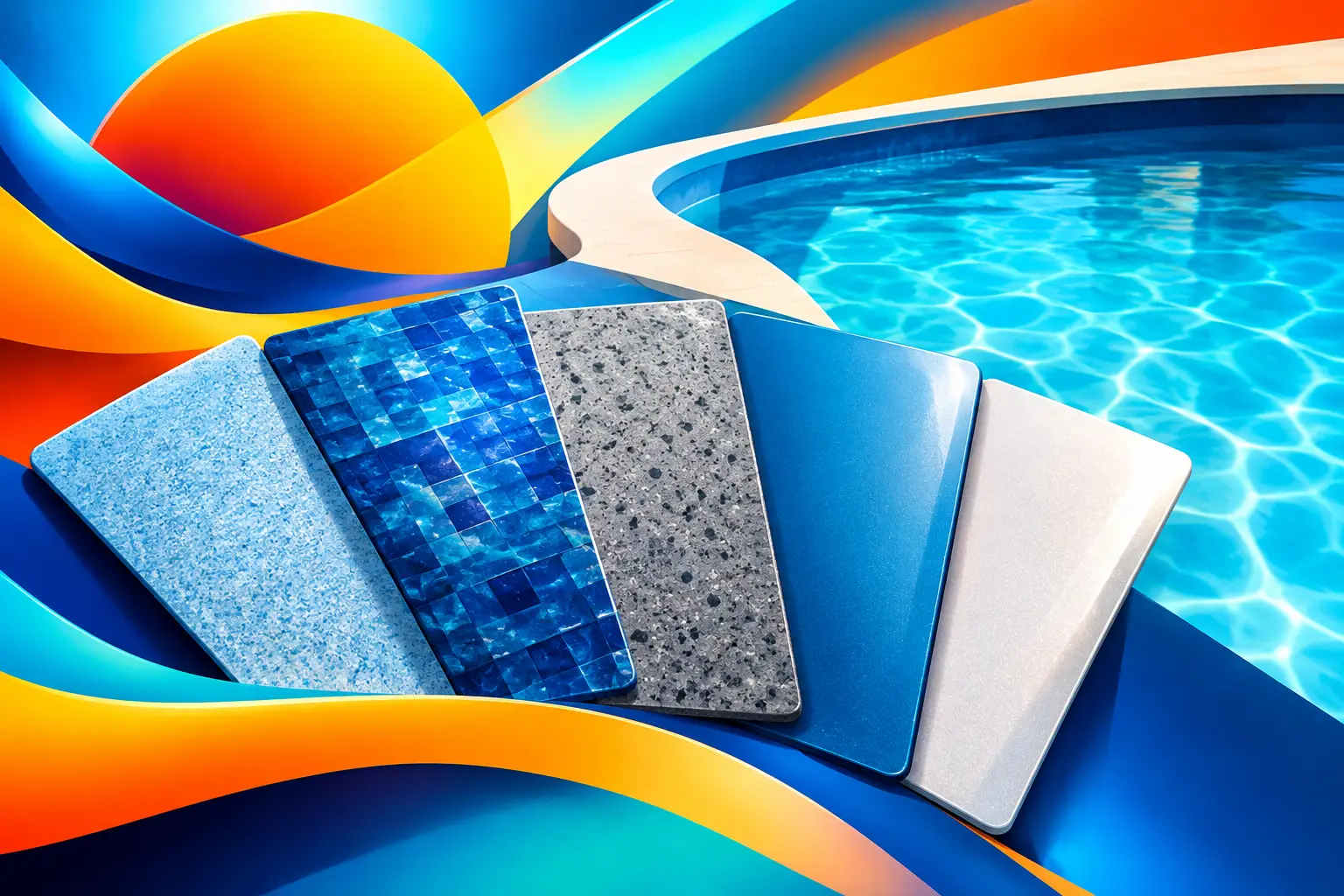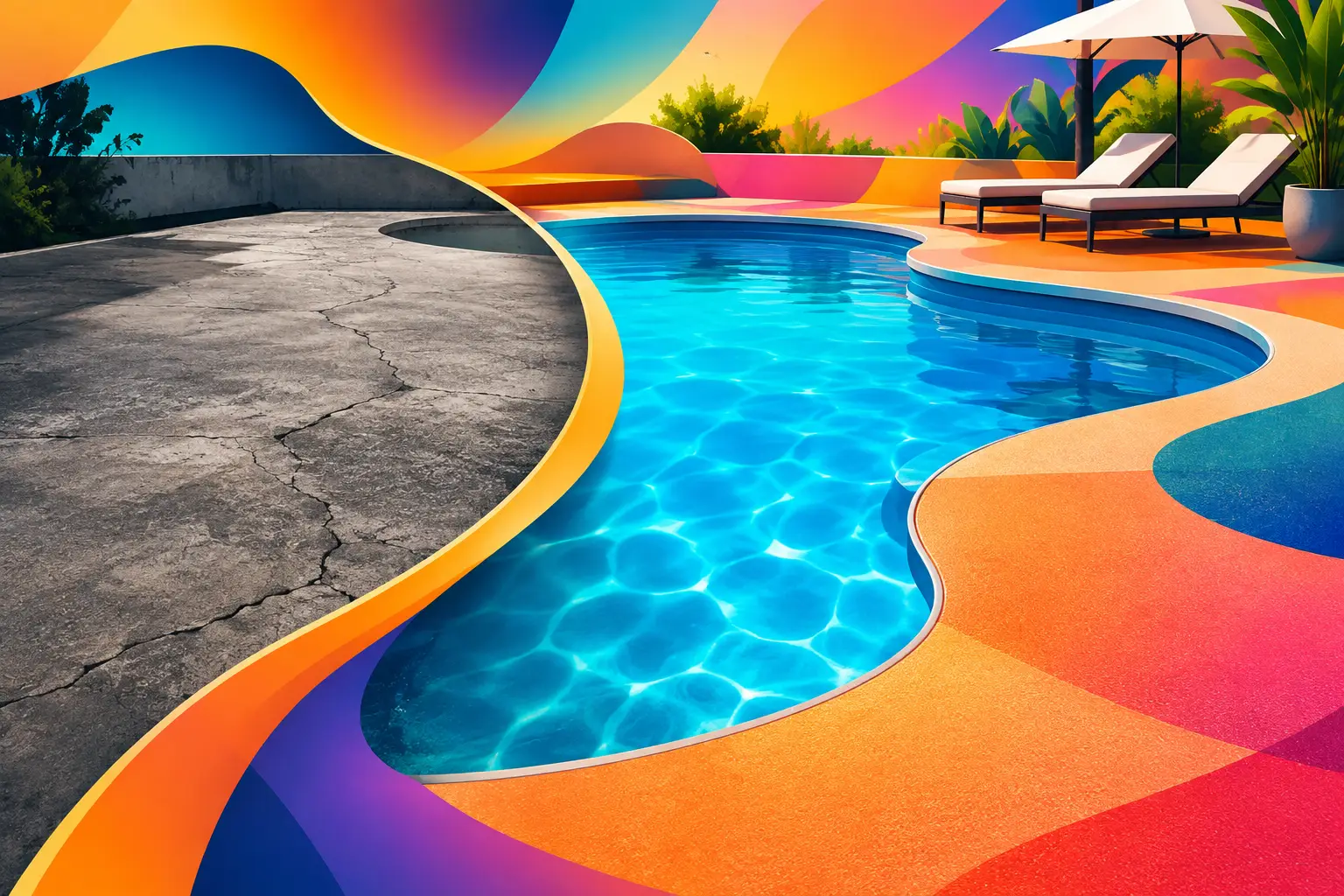
A pool area can look exceptional on installation day and still become a disappointment within a few seasons. Heat, direct sun, pool chemicals, wet feet, furniture movement, and shifting concrete all test the finish every day. Knowing how to compare pool coatings means looking beyond a color sample or a low initial quote and choosing a system that protects the surface while supporting the atmosphere you want to create.
First, clarify what is being coated. “Pool coating” can describe the finish inside the pool shell, but it can also refer to a coating or overlay on the surrounding concrete deck. The two applications have very different performance requirements. If your goal is to transform a worn, slippery, or uninspired pool deck, compare products designed specifically for exterior concrete and wet-foot traffic – not generic floor paints or interior coating systems.
Start With the Condition of Your Concrete
The best-looking coating cannot compensate for an unstable slab. Before comparing colors, textures, or price ranges, evaluate the concrete underneath. Surface cracks, peeling paint, moisture movement, settlement, and poor drainage each affect which system can perform well.
Hairline cracking may be manageable within a properly prepared decorative overlay. Wider cracks, movement joints, or areas where the slab is sinking require a more deliberate repair strategy. A quality contractor should explain what is cosmetic, what needs repair, and what cannot be permanently hidden because the concrete itself is still moving.
Moisture deserves particular attention in Alabama and Florida. Humidity, frequent rain, groundwater, and irrigation can create vapor pressure below a slab. That pressure can interfere with adhesion if it is not assessed and addressed. A coating estimate that skips surface preparation, crack treatment, and moisture considerations may appear attractive at first, but it leaves out the work that protects the investment.
How to Compare Pool Coatings by Performance
A pool deck must do more than look polished. It needs to remain comfortable, stable, and easy to care for when the space is being used exactly as intended. Compare each option against the conditions of your property rather than assuming one material is best for every pool.
Heat and barefoot comfort
In a sun-exposed backyard, surface temperature can be the deciding factor. Dark, dense finishes tend to retain more heat, while lighter colors and systems engineered for exterior use may feel more comfortable underfoot. Texture also matters. A lightly textured finish can improve traction, but an aggressive profile may be uncomfortable for bare feet and harder to clean.
Ask to see finished samples outdoors when possible. A color that feels elegant in a showroom can look dramatically brighter in Florida sun or warmer against a brick home. Consider how the deck will feel at midafternoon, not simply how it photographs at sunset.
Slip resistance in wet areas
No pool deck should be chosen on appearance alone. Water, sunscreen, and splashing make traction a central safety consideration. The right system balances a refined finish with enough texture for wet-foot grip.
This is where a bespoke approach has real value. A subtle broadcast aggregate, a textured overlay, or a carefully chosen finish profile can create practical traction without turning a luxury outdoor space into something visually rough or industrial. Ask how slip resistance is achieved and whether that texture is integrated into the system or simply added as an afterthought.
UV and chemical resistance
Exterior coatings live under constant ultraviolet exposure. Some materials can fade, chalk, yellow, or lose visual depth when they are not intended for sustained sunlight. Pool water, chlorine, salt, and cleaning products introduce another layer of exposure, especially near the waterline and splash zones.
Compare the topcoat as carefully as the decorative layer beneath it. The topcoat often determines stain resistance, UV stability, cleanability, and the final sheen. A beautiful coating with an unsuitable protective layer may require earlier refinishing than expected.
Movement and durability
Concrete expands, contracts, and occasionally develops new cracks. Coatings vary in flexibility, thickness, and ability to bridge minor imperfections. Decorative overlays can add dimension and disguise a tired surface beautifully, but they are not a cure for active slab movement. Resinous systems can deliver impressive durability in the right setting, but not every resin performs well in full exterior sun.
Rather than asking which coating lasts the longest in general, ask which system is best suited to your slab, climate, drainage, and use pattern. A quiet residential pool deck and a hospitality pool area with constant guest traffic should not be specified the same way.
Compare the Design Possibilities, Not Just Swatches
Premium pool surroundings are designed as a complete visual field. The deck should complement the pool tile, coping, architecture, landscaping, outdoor kitchen, and furniture instead of competing with them.
Basic paint-like coatings often offer limited visual depth. Decorative overlays can create a more elevated result through layered color, hand-applied texture, and patterns that suggest natural stone or other architectural materials. The right finish can make a large expanse of concrete feel intentional and tailored rather than like a necessary border around the water.
When reviewing options, look at full project photos, not only close-up samples. Ask how the color will read across the entire deck and around curves, steps, drains, and transitions. Also consider sheen. High gloss can look striking in a controlled setting, but it may magnify water spots, glare, and imperfections outdoors. A satin or low-sheen finish often delivers a more relaxed, sophisticated appearance around a pool.
Look Closely at Installation Quality
A pool coating is only as reliable as its preparation and installation. This is the part of the comparison that is easiest to overlook because it is less visible than color and texture. It is also where premium craftsmanship separates a lasting transformation from a temporary cover-up.
A professional scope should identify how the concrete will be cleaned and mechanically prepared, how cracks and damaged areas will be handled, what material layers are included, and how the system will cure before use. It should also address protection of coping, landscaping, doors, and adjacent finishes during installation.
Be cautious of vague proposals that promise a complete coating without naming preparation steps or materials. The lowest bid may exclude repairs, proper profiling, topcoat protection, or the labor required to achieve consistent decorative detail. Price matters, but comparing only the final number is not a fair comparison when the scopes are different.
Consider Maintenance as Part of the Luxury Experience
A high-end pool deck should enhance your time outdoors, not add another demanding maintenance routine. Ask what everyday cleaning involves, which products should be avoided, and whether the surface needs periodic resealing or recoating.
Light, textured finishes may disguise dust and minor imperfections well, while very dark or glossy surfaces can show water spotting more readily. Deep texture can provide excellent grip but may collect debris around outdoor dining or landscaped areas. There is no universal winner. The best choice is the one that fits your tolerance for maintenance and the way the space is used.
It is also wise to ask about repairability. Can a small damaged area be blended successfully? Will future touch-ups be visible? A handcrafted decorative finish may require a skilled installer for invisible repairs, but that same level of artistry is often what makes the original surface feel distinct.
Use a Better Comparison Checklist
Before selecting a pool deck coating or overlay, make sure every proposal answers the same core questions:
- Is the system designed for exterior concrete, direct UV exposure, and wet-foot traffic?
- What preparation, crack repair, and moisture evaluation are included?
- How will the finish provide traction without sacrificing barefoot comfort?
- What topcoat protects the color and decorative surface from sun, chemicals, and stains?
- What maintenance is expected over the next several years?
- Can the contractor show comparable completed projects and explain the installation process clearly?
The strongest choice is rarely the option with the boldest sales claim. It is the one with a credible technical fit, a design that belongs with your property, and an installation plan detailed enough to inspire confidence.
For homeowners and commercial property owners who expect more from concrete, the pool deck is an opportunity to establish a sense of arrival. Superior Concrete Solutions approaches that opportunity as a crafted design project: a surface built to handle real outdoor life while bringing elegance, color, and character to the space around the water. Choose the coating that makes every step from the house to the pool feel considered.