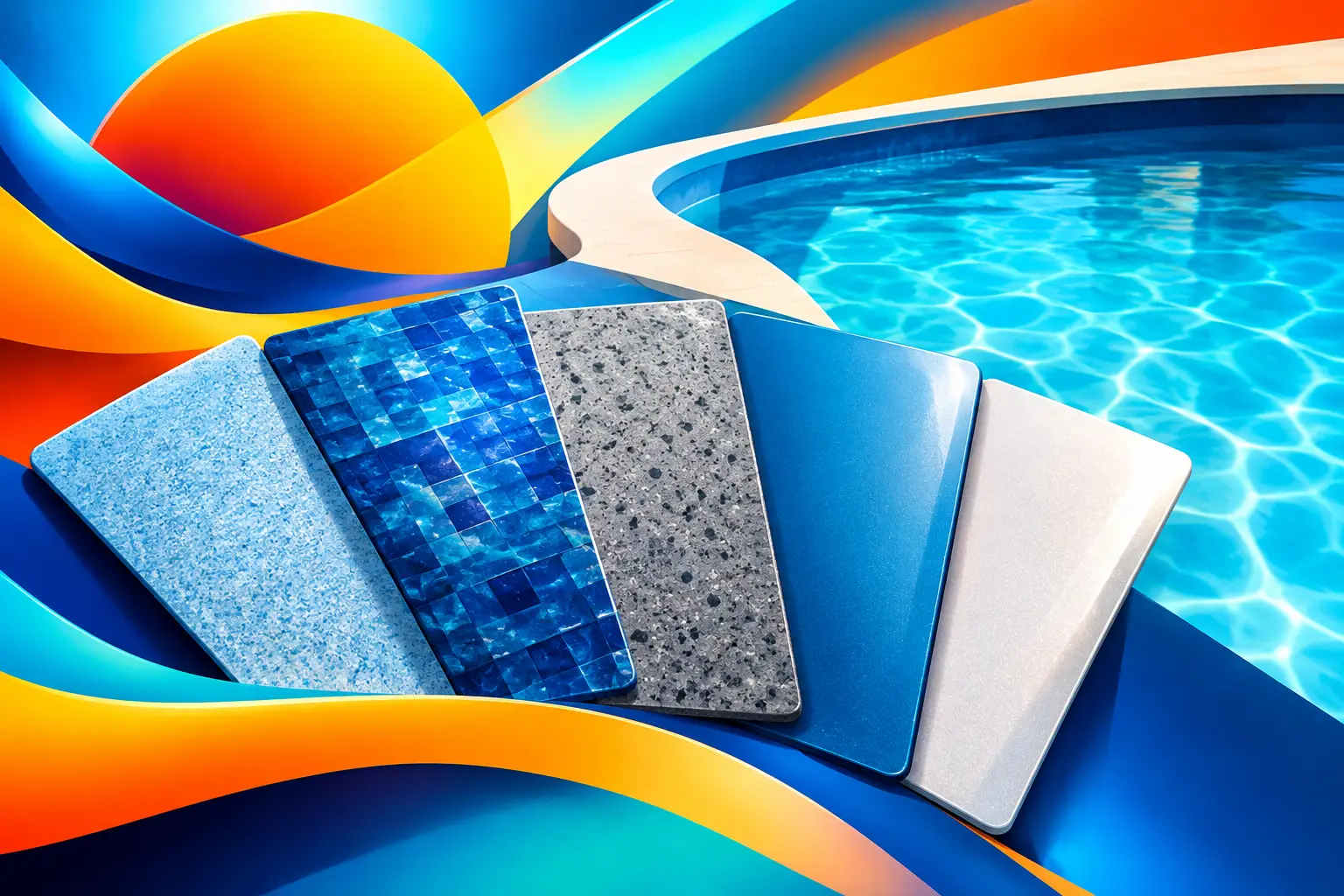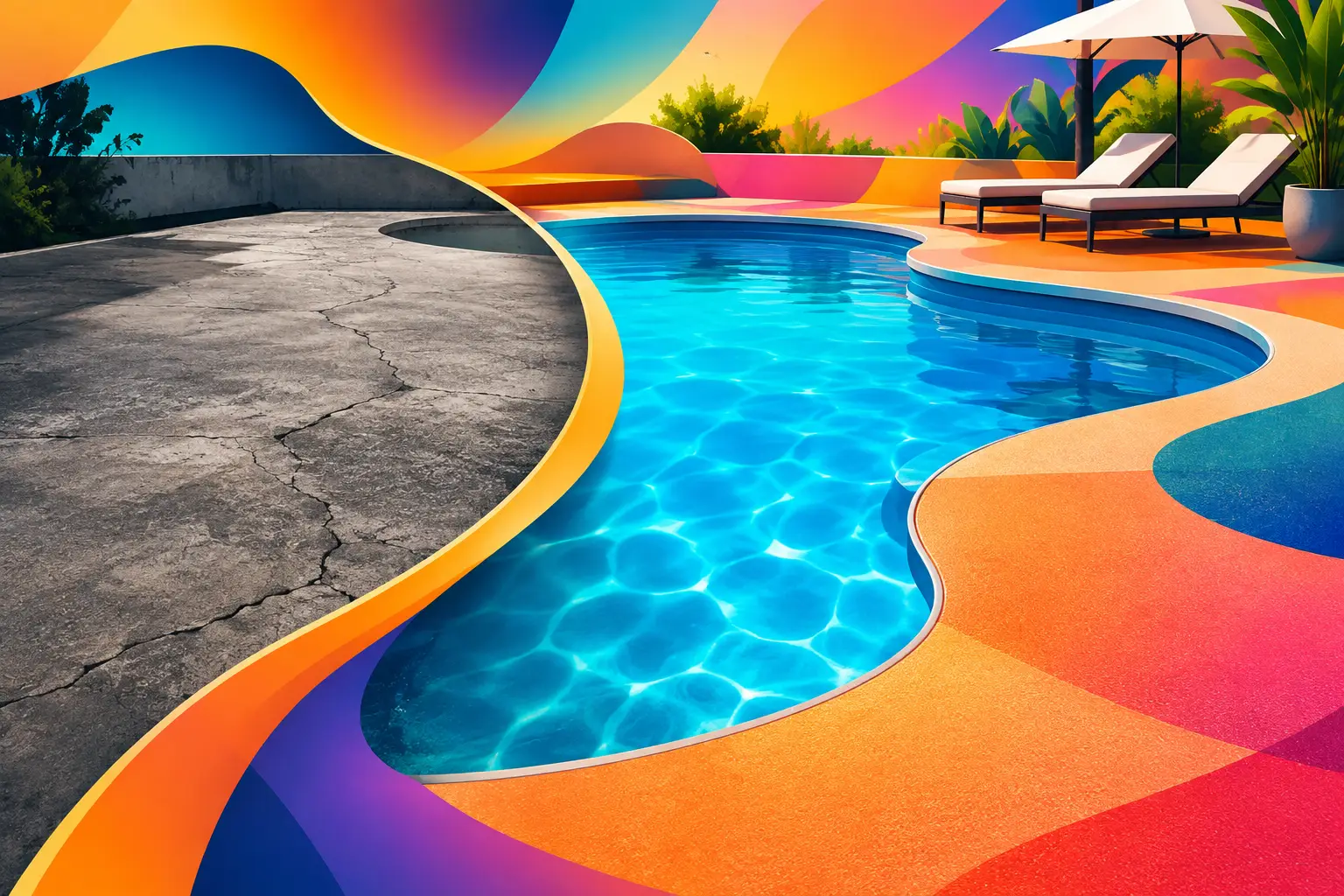
A pool deck should feel like an extension of the home, not the overlooked concrete surrounding it. Yet sun exposure, chlorine, salt, shifting temperatures, and years of foot traffic can leave even a well-built deck stained, faded, cracked, or painfully plain. Pool overlays offer a design-forward way to restore that surface without automatically committing to demolition and replacement.
The right overlay does more than cover imperfections. It can introduce elegant color movement, a custom texture underfoot, and a finish that brings the entire outdoor environment into alignment with the architecture of the property. For homeowners and commercial properties that expect more from their exterior spaces, this is where decorative concrete becomes a true upgrade.
What Are Pool Overlays?
A pool overlay is a specially formulated cementitious or polymer-modified material applied over an existing concrete pool deck. Once the substrate has been evaluated and properly prepared, the overlay creates a new decorative wear surface. It may be hand-troweled, spray-applied, stamped, textured, scored, stained, or sealed depending on the desired design.
This is not a shortcut for every damaged slab. A pool deck with major structural movement, extensive heaving, or unresolved drainage failures needs those underlying issues addressed first. But when existing concrete is fundamentally sound and the problems are largely cosmetic or surface-level, an overlay can deliver a dramatic transformation with less disruption than full replacement.
The appeal is clear: the original slab remains in place, while the visible surface is reimagined. A dated gray deck can become a refined stone-inspired setting, a warm textured retreat, or a contemporary finish with clean, architectural lines.
Why a Pool Deck Overlay Is a Premium Upgrade
Plain concrete is functional, but it rarely contributes much to the experience of a pool area. A thoughtfully designed overlay changes the visual hierarchy of the space. It frames the water, complements exterior finishes, and gives furniture, landscaping, and lighting a more polished foundation.
For luxury residences, that matters because outdoor living is not separate from the home. It is part of the property’s first impression and part of how owners entertain, relax, and invest in their surroundings. At a boutique hotel, community pool, or hospitality venue, a refreshed deck also influences how guests perceive the entire property.
Performance matters just as much as appearance. A professionally selected pool deck finish can provide a more comfortable, textured walking surface and simplify routine cleaning. The finish should be chosen with water exposure, slip resistance, local weather, and anticipated traffic in mind. Beautiful results are strongest when design and practical use are considered together from the beginning.
Texture Is More Than a Design Detail
Around a pool, texture serves a purpose. The deck needs enough profile to feel secure when wet, without becoming harsh on bare feet or difficult to maintain. That balance is one reason pool overlay work should not be treated as a generic coating project.
A refined texture can mimic the character of natural stone, lightly brushed concrete, or a hand-finished surface while still fitting the way the space is used. The most appropriate finish depends on the pool’s exposure, the homeowner’s preferences, the age of the occupants, and whether the deck sees heavy entertaining or commercial-level traffic.
Color Sets the Temperature of the Space
Color has an outsized effect on a pool deck. Soft sand, limestone, warm taupe, pale gray, and muted coastal tones can make a deck feel expansive and composed. Richer earth tones can ground a lush landscape or complement Mediterranean-inspired architecture. Contemporary homes may call for cool neutrals and restrained tonal variation.
Lighter finishes often feel more comfortable under direct sun than darker colors, although no surface can remain cool in every Florida or Alabama summer condition. Sun exposure, shade patterns, material selection, and finish color all affect surface temperature. A consultation should address those realities rather than relying on a one-size-fits-all recommendation.
When Pool Overlays Are a Smart Choice
An overlay is often an excellent solution for decks with faded color, minor surface scaling, stubborn stains, worn sealers, outdated patterns, or a plain appearance that no longer suits the property. It is also a compelling option when a homeowner wants a major aesthetic improvement while avoiding the expense and mess of tearing out a large concrete deck.
Hairline cracking does not automatically rule out an overlay, but it does require an honest assessment. Cracks can reflect through a new decorative surface if the slab continues to move. A skilled installer evaluates crack patterns, expansion joints, drainage, and substrate integrity before recommending a system. The goal is not to conceal a problem temporarily. It is to create a finish with the best possible foundation for long-term performance.
Pool overlays may not be the right answer when the concrete is severely unstable, settling dramatically, or holding water because of incorrect slope. If water is consistently directed toward the home, pool, or seating areas, drainage must take priority. Premium craftsmanship starts with the conditions beneath the finish, not just the color on top.
The Preparation Behind a Superior Finish
The difference between a short-lived surface and an exceptional one is rarely visible on installation day. It is found in the preparation. Existing sealers, contaminants, weak concrete, and surface residues can interfere with adhesion, so the deck must be cleaned and mechanically profiled as needed before decorative materials are applied.
Repairs are then addressed with compatible materials, and the installer carefully protects the pool, coping, landscaping, and surrounding architecture. This stage requires precision. A pool deck has transitions, edges, drains, steps, control joints, and curved details that cannot be treated casually.
After the overlay is applied, the decorative work begins. Depending on the selected system, that can include hand-applied texture, custom color layering, scoring, accent work, and protective sealing. Each decision affects the finished character of the deck. A premium result should look intentional from the broadest view of the yard down to the edge of a step or the line beside the coping.
Designing an Overlay Around the Entire Outdoor Space
The strongest pool deck designs do not exist in isolation. They respond to the home’s exterior color, roofline, patio finish, outdoor kitchen, landscaping, and the hue of the pool water itself. A pale overlay may emphasize a crisp, resort-inspired aesthetic. A warmer blend can make the setting feel more relaxed and organic. A controlled, minimalist palette can support modern architecture without competing for attention.
This is also the time to consider how the pool deck connects to adjacent concrete. If a patio, walkway, or covered lanai meets the pool area, a coordinated finish can make the property feel larger and more cohesive. The surfaces do not all need to match exactly. In many high-end designs, a subtle shift in texture or tone defines separate zones while maintaining a unified visual language.
Customization should be purposeful. Too much pattern or contrast can make a large deck feel busy, especially in an outdoor setting already filled with water reflections, planting, furniture, and architectural detail. Bespoke does not have to mean loud. Often, the most elegant pool overlays use layered neutrals, tailored texture, and quiet variation that reveals itself over time.
Care Expectations for a Decorative Pool Deck
A decorative overlay is designed to reduce the visual burden of an aging concrete deck, but it still deserves regular care. Sweeping away debris, rinsing the surface, cleaning spills promptly, and using products appropriate for the installed finish will preserve its appearance. Pool chemicals should be managed carefully, and chemical splashes should not be allowed to sit unnecessarily on the deck.
Sealers are a key part of many decorative concrete systems. Their maintenance schedule depends on the product used, UV exposure, traffic, cleaning habits, and local conditions. A deck in full sun near saltwater or under constant commercial use may require different maintenance planning than a shaded residential pool area. Professional guidance should be specific to the installed system, not generic advice borrowed from another surface.
Avoid aggressive pressure washing or harsh cleaners unless they have been approved for the finish. The objective is to protect the surface profile and color while keeping the deck clean, not to strip away the details that made it special.
Choosing the Right Installation Partner
Pool deck work asks for more than decorative talent. It requires a clear understanding of concrete behavior, moisture, weather exposure, surface preparation, safety-minded texture, and fine finish work. The installer should be ready to discuss the condition of the existing slab, realistic design options, maintenance needs, and the project sequence before any material is applied.
Ask to see how the proposed finish will relate to your coping, surrounding structures, and desired aesthetic. A quality consultation should make decisions easier, not pressure you into a stock color or a surface that does not suit your property. At Superior Concrete Solutions, the goal is to treat the deck as a crafted extension of the outdoor environment, with details tailored to the way the space will be enjoyed.
A well-designed pool deck invites people to stay outside a little longer. Begin with the condition of the concrete, be candid about the performance requirements, and choose a finish that gives the entire setting the elegance it deserves.