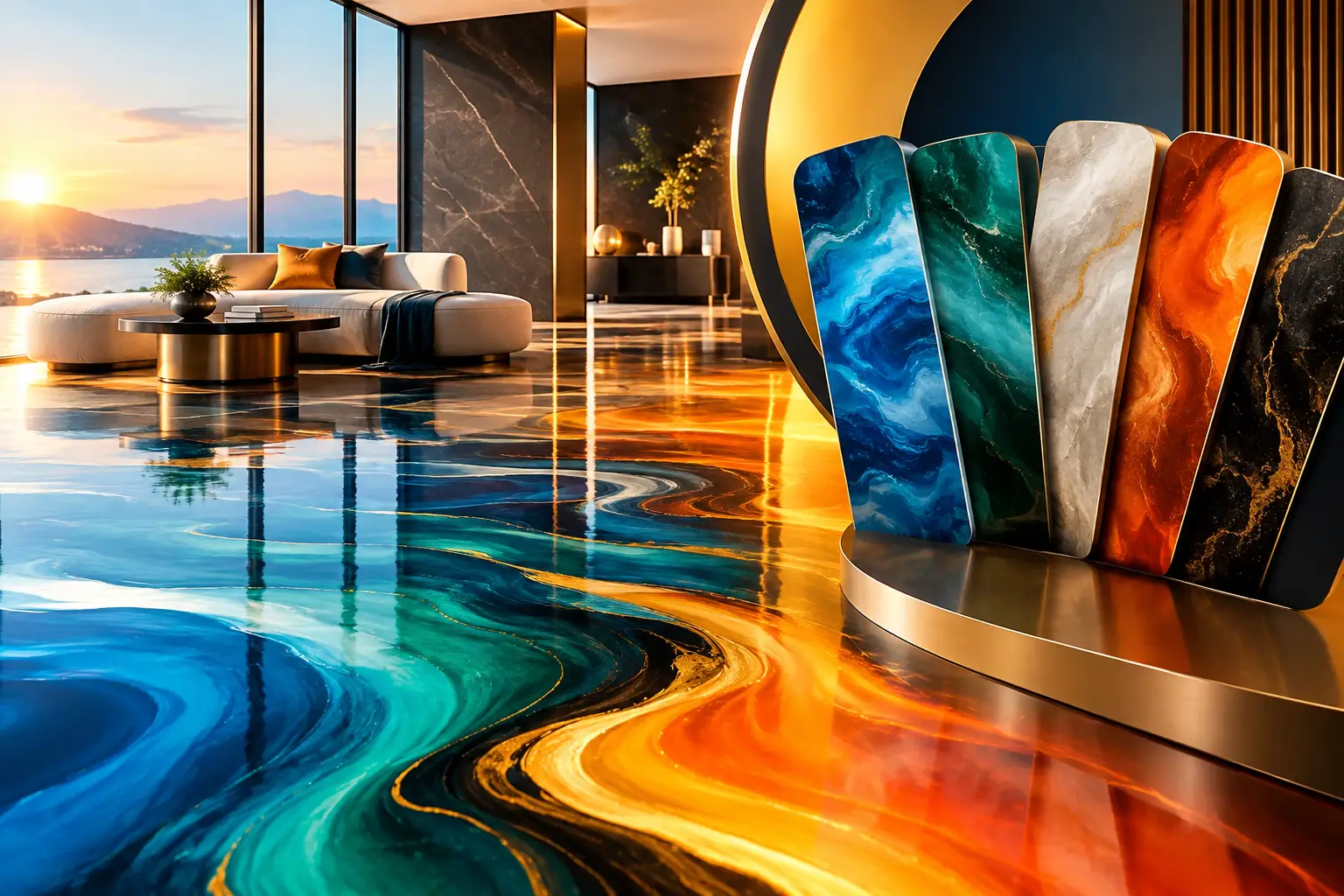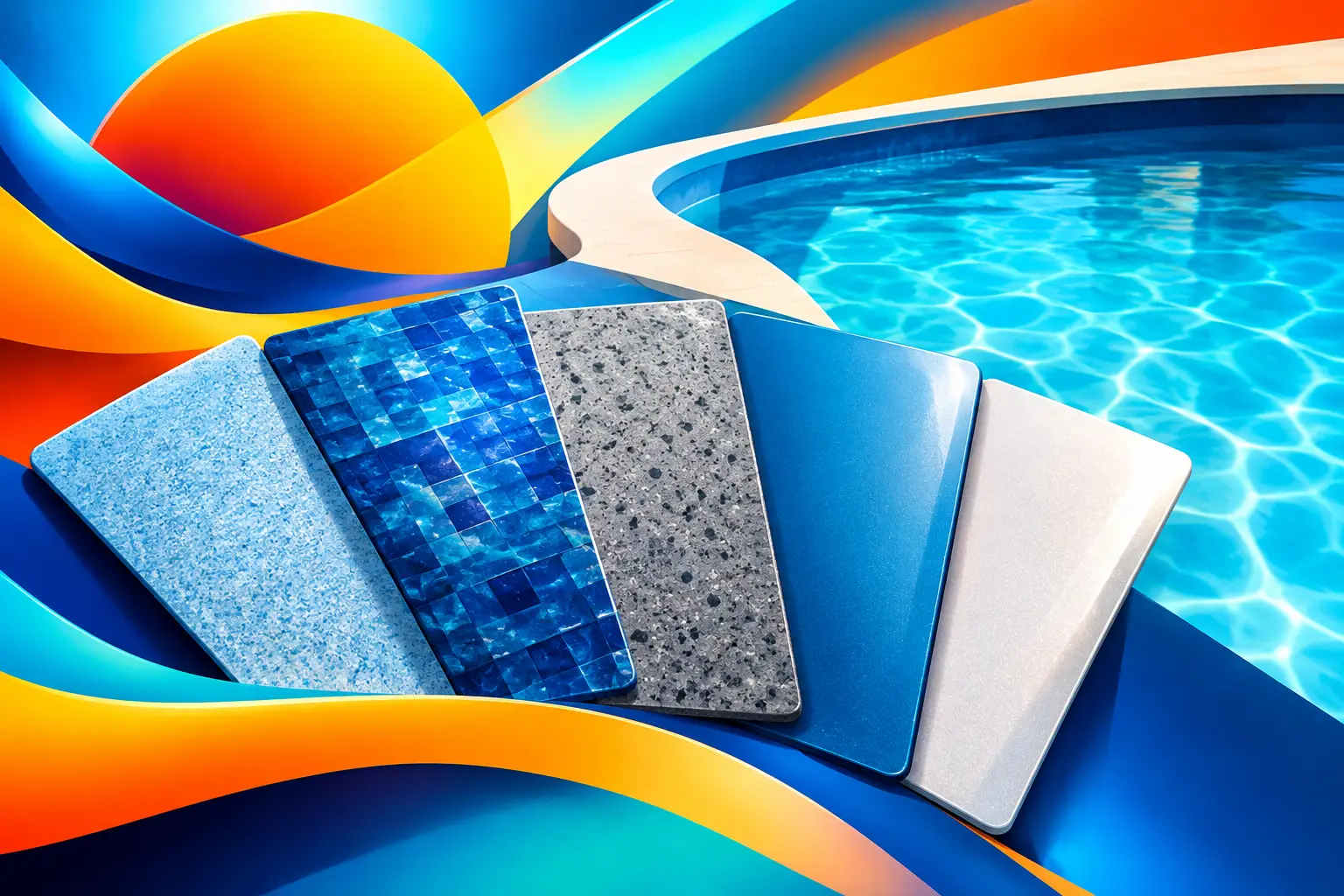
A metallic epoxy floor can read like polished stone, flowing water, molten metal, or a custom work of art. The best metallic epoxy color combinations do more than look dramatic in a sample board – they complement the room’s lighting, architecture, furnishings, and intended use. The right palette gives a surface depth and movement while preserving the refined finish that makes metallic epoxy such a distinctive luxury upgrade.
Unlike a solid-color coating, metallic epoxy is inherently expressive. Pigments shift across the floor as light moves through the space, and no two installations develop in precisely the same way. That originality is part of the appeal. It also means color selection deserves the same thoughtful attention as cabinetry, tile, wall finishes, and lighting.
Choosing the Best Metallic Epoxy Color Combinations
A beautiful metallic floor begins with the mood you want the room to carry. Cool charcoal and silver tones feel tailored and contemporary. Bronze, copper, and espresso bring warmth and a more grounded elegance. Bright whites paired with pearl or soft gray create an airy, gallery-like finish, while deep blues and blacks introduce memorable contrast.
The scale of the room matters, too. Darker combinations can make a large showroom, entertainment room, or retail space feel intimate and sophisticated. In a smaller interior, a pearl, silver, or light gray foundation often helps preserve brightness. That does not mean a compact room cannot handle a dramatic floor. It simply needs enough contrast in the surrounding finishes to avoid feeling visually heavy.
Lighting is equally influential. Natural daylight reveals more of the metallic movement and color variation. Warm interior lighting can enrich copper, bronze, and gold, while cool LEDs tend to sharpen silver, blue, and graphite. A professional installer should review the space itself, not just a color chart, before finalizing a bespoke palette.
Charcoal, Silver, and Pearl
Charcoal, silver, and pearl is one of the most versatile combinations for modern homes and commercial interiors. It carries the polish of natural stone with more movement and a more custom appearance. The charcoal provides a confident base, silver adds crisp reflective detail, and pearl prevents the finish from becoming flat or overly dark.
This palette works especially well in open-concept living areas, upscale garages, salons, offices, and contemporary retail spaces. Pair it with black accents, brushed nickel, light oak, white walls, or matte cabinetry for a composed, architectural look. It is also a practical choice for clients who want visual interest without a color that competes with every furnishing in the room.
Black, Bronze, and Copper
For a floor with richness and presence, black, bronze, and copper delivers. The black background creates depth, while bronze and copper ribbons produce the warmth associated with aged metal, leather, and tailored interiors. It is dramatic without relying on a bright or trendy color.
This combination is particularly striking in home bars, wine rooms, restaurants, lobbies, and executive office spaces. It can also elevate a garage designed around collector vehicles or custom cabinetry. Because the palette is dark and dimensional, it benefits from intentional lighting – recessed fixtures, decorative pendants, or well-positioned wall lighting help bring out the metallic layers.
Midnight Blue, Graphite, and Silver
Midnight blue, graphite, and silver creates a more unexpected version of the classic dark metallic floor. The blue introduces sophistication rather than novelty when it is kept deep and restrained. Graphite anchors the finish, and silver gives it a clean flash of contrast.
This is an excellent selection for coastal-inspired interiors in Florida, contemporary media rooms, hospitality spaces, and businesses with a polished brand identity. The key is controlling the balance. Too much silver can make the floor feel icy, while too much blue may appear almost black under limited light. A measured blend allows the blue to reveal itself gradually as people move through the room.
White, Pearl, and Soft Gray
White, pearl, and soft gray offers a bright, high-design interpretation of metallic epoxy. It has an elegant, almost cloudlike movement that makes it well suited to interiors where cleanliness, openness, and light are central to the design. Think upscale boutiques, beauty studios, modern kitchens, pool houses, and luxury residential living spaces.
This palette asks more from preparation and installation because light colors reveal inconsistencies more readily than deep ones. It also calls for an honest conversation about lifestyle. A properly installed epoxy floor is easy to maintain, but a pale finish will naturally show dark debris, tire marks, and heavy commercial traffic sooner than a charcoal or bronze design. For the right space, however, the visual payoff is exceptional.
Espresso, Gold, and Bronze
Espresso, gold, and bronze brings a warmer, more traditional luxury to metallic flooring. The espresso ground tone keeps the design sophisticated, while bronze creates movement and gold catches the light in carefully placed highlights. The result can resemble a richly veined natural slab without trying to imitate one exactly.
It pairs beautifully with walnut cabinetry, cream walls, brass fixtures, and warm white lighting. Consider it for entry areas, living rooms, boutique hospitality settings, or residential interiors where cool gray palettes would feel too stark. In a room with abundant warm finishes, keep the gold as an accent rather than the dominant pigment. That restraint is what keeps the floor elegant rather than overly reflective.
Teal, Black, and Copper
For clients who want a true statement surface, teal, black, and copper offers saturated color with a sophisticated foundation. Black gives the teal depth, and copper adds warmth that prevents the design from feeling overly cool. It can suggest deep water, mineral stone, or oxidized metal depending on the application technique and lighting.
This combination is best used with purpose. It suits a feature room, salon, restaurant, creative studio, or branded commercial environment where the floor is meant to become part of the experience. In a whole-home application, it generally works best when the rest of the design is quiet and intentional. Neutral walls, simple furnishings, and natural wood allow the floor to remain the focal point.
Color Is Only One Part of the Finish
The same pigments can look entirely different based on how they are installed. Pigment density, base color, blending method, roller work, and the timing of each application layer all influence the final pattern. A sample is useful for direction, but it should never be treated as a promise of an identical finished floor. Metallic epoxy is custom by nature, and that variation is a feature of the craft.
Gloss level also changes how a combination performs. A high-gloss clear coat intensifies depth and reflection, which is ideal for many luxury interiors. In spaces with expansive windows or intense overhead lighting, a satin or reduced-gloss finish may be worth considering to control glare. The right choice depends on how the room is used, not simply which sheen looks best in a photograph.
Practical requirements should guide the design as well. A garage may benefit from a darker colorway that conceals road dust and tire residue. A busy restaurant needs a finish planned around maintenance, traction, and the character of its lighting. For wet areas or entries, a professionally specified traction additive can be incorporated without sacrificing the floor’s visual impact.
Build the Palette Around the Entire Space
The strongest metallic epoxy floor is not chosen in isolation. Bring cabinet samples, paint colors, countertop selections, furniture fabrics, and photos of the room into the design conversation. Even one detail, such as a brass chandelier, matte-black door hardware, or a deep green feature wall, can point the palette in a more cohesive direction.
At Superior Concrete Solutions, the goal is never to apply a standard coating and call it custom. Each metallic epoxy design should feel considered, durable, and worthy of the space it transforms. When color, lighting, and craftsmanship are planned together, the floor becomes more than a surface underfoot – it becomes the detail people remember long after they leave the room.