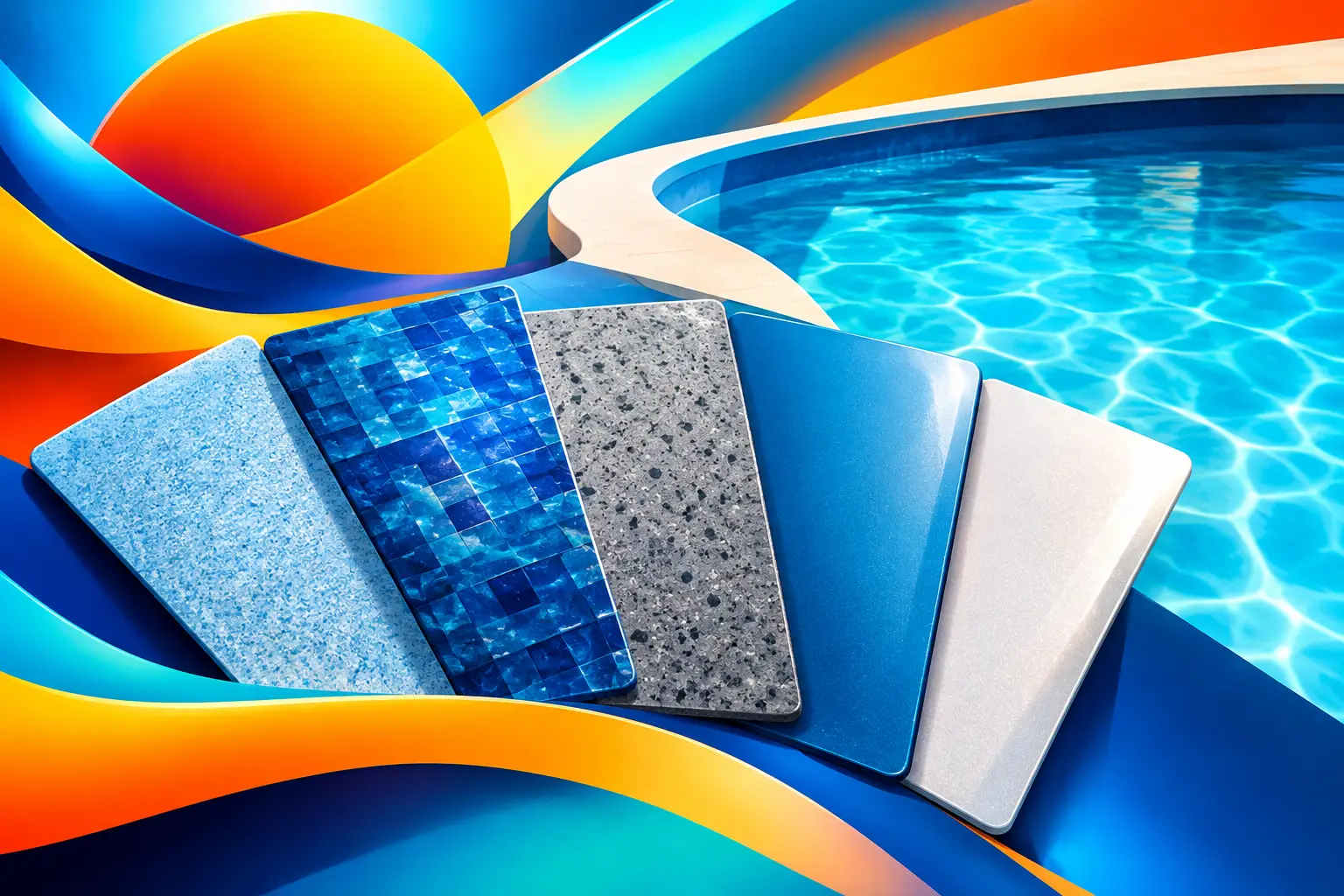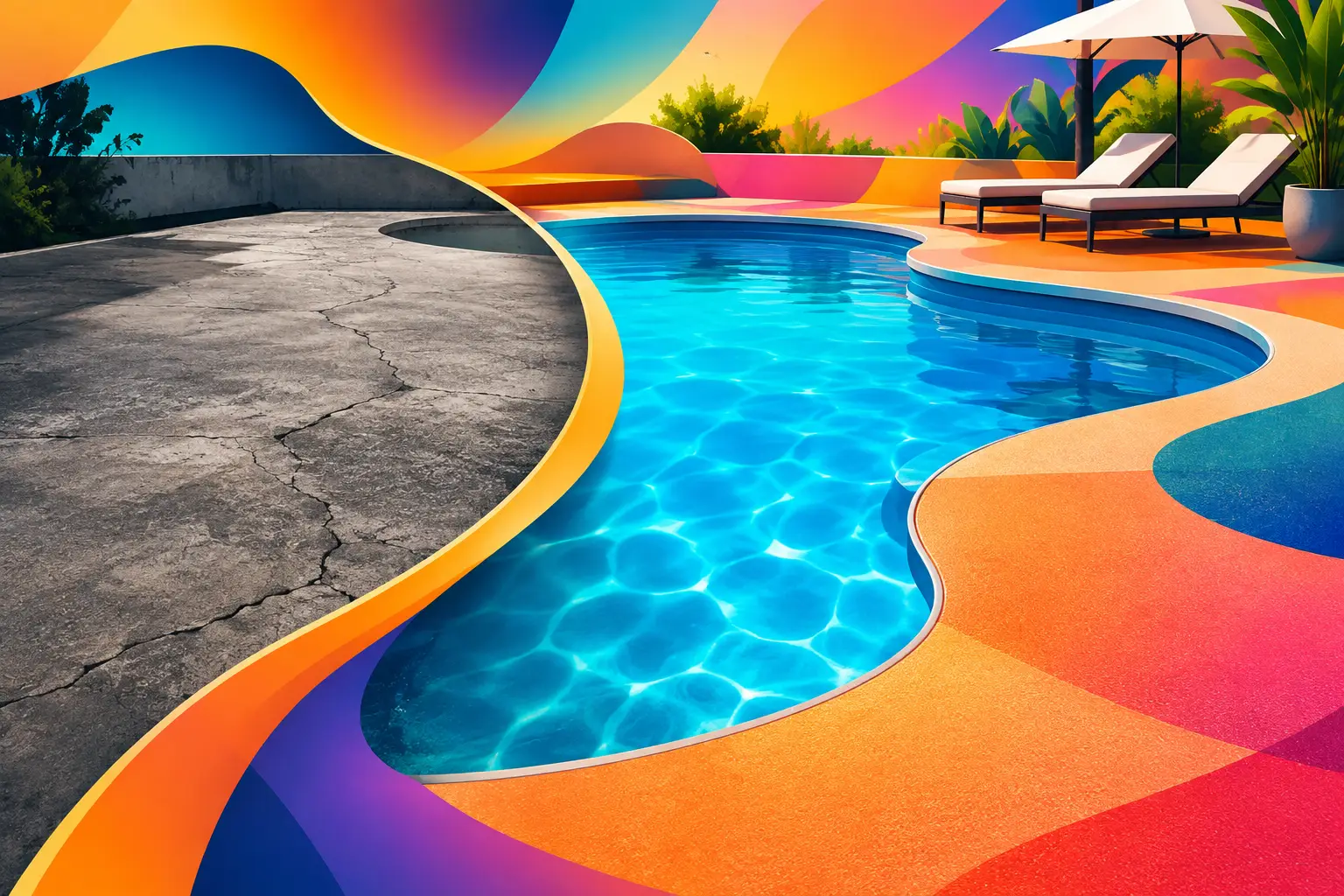
A garage floor covered in old tire marks needs a different solution than a patio with beautiful natural variation hiding beneath years of weather. That is the real question behind concrete stain versus flake coating: Are you looking to enhance the concrete you have, or create a completely new surface over it?
Both finishes can elevate plain concrete dramatically. Yet they achieve luxury in very different ways. A stain brings out the character already in the slab, while a flake system creates a refined, highly durable architectural finish with consistent color, texture, and performance. The best choice comes down to the setting, the condition of the concrete, and the visual experience you want every day.
Concrete Stain Versus Flake Coating at a Glance
Concrete stain is a color treatment that penetrates or bonds closely to the concrete surface. Acid stains react with minerals in the slab to produce variegated, marbled tones. Water-based stains offer a wider color range and can create anything from subtle earth tones to more expressive decorative effects. Neither is intended to conceal major surface flaws. Stain works with the concrete’s existing personality.
Flake coating is a multi-layer resin system, commonly built with epoxy or polyaspartic materials. After the base coat is applied, decorative vinyl flakes are broadcast across the surface, then sealed beneath a clear protective topcoat. The result is a continuous, easy-care floor with depth, texture, and far more visual consistency than stained concrete.
For a client who loves organic movement and a one-of-a-kind surface, stain can be compelling. For someone who wants a polished garage, retail floor, workshop, or utility space that stands up to daily use, flake coating is often the stronger long-term investment.
The Design Difference: Natural Character or Curated Finish?
The visual distinction is immediate. Stained concrete has an artisanal, mineral-based appearance. Color can pool, shift, and react differently from one area of the slab to another. That variation is not a defect when the finish is designed properly. It is the feature that gives stained concrete its warmth and individuality.
This makes stain especially attractive for interiors, covered patios, courtyards, and spaces with a rustic-modern, Mediterranean, industrial, or transitional aesthetic. Rich browns, soft grays, amber tones, and layered colors can make a simple slab feel more intentional without erasing its history.
Flake coating offers a more tailored visual statement. Flake blends range from understated neutral mixes to high-contrast designer palettes, allowing the floor to coordinate with cabinetry, exterior paint, brand colors, or surrounding finishes. The chips create visual depth while helping disguise the small dust, scuffs, and debris that are inevitable in active spaces.
For upscale garages, flake coatings bring the clean, composed appearance many homeowners expect from the rest of the home. In commercial environments, they can support a polished brand presentation without feeling sterile. The floor appears finished, not merely colored.
What happens to imperfections?
This is where expectations matter. Stain will not hide patchwork, deep cracks, old adhesive shadows, or uneven repairs. In fact, it may make some of those details more visible. A skilled installer can address appropriate repairs and use color techniques to minimize distractions, but stained concrete remains honest about the slab beneath it.
Flake coating is more forgiving of cosmetic flaws. Proper crack repair and surface preparation are still essential, but the flake broadcast helps visually soften minor imperfections and variation. It cannot correct structural movement or a severely failing slab, yet it provides more design control when the existing concrete is less than pristine.
Durability Depends on the Environment
A decorative finish should look exceptional after the first week and continue performing when real life arrives. Vehicles, pet traffic, dropped tools, outdoor moisture, pool water, and frequent cleaning all affect which system belongs in a space.
Concrete stain becomes part of the surface rather than sitting on top as a thick protective film. It does not peel in the same way a poorly bonded coating can. However, stain typically relies on a sealer or protective finish for resistance to spills, abrasion, and moisture exposure. That protective layer may need periodic renewal, especially in high-traffic rooms or outdoor areas exposed to intense sun and rain.
Flake coatings are engineered as protective systems. With the right material selection and professional installation, they offer excellent resistance to hot-tire pickup, chemicals, abrasion, and everyday impacts. This is why they are a leading choice for garages, showrooms, workspaces, laundry rooms, and busy commercial settings.
Not every flake system is the same. A premium installation considers the slab’s moisture condition, the expected use, cure times, and the topcoat’s UV stability. In Alabama and Florida, where heat, humidity, and strong sunlight can challenge floor finishes, those details are not optional. They determine whether a floor continues to look superior or begins to fade, yellow, or lose adhesion prematurely.
Where Each Finish Performs Best
Stained concrete performs beautifully in climate-controlled interiors, covered outdoor living areas, and decorative spaces where natural movement is part of the vision. It is also a strong option for homeowners who want to preserve the open, monolithic feel of concrete rather than introduce a thicker coating system.
For uncovered patios, stain can work well when the concrete is sound and drainage is adequate. The key is choosing the right sealer and accepting that exterior finishes will need maintenance over time. Sun, standing water, leaf tannins, and furniture movement all leave their mark on outdoor surfaces.
Flake coating excels in garages and high-use interiors. It is also well suited to commercial back-of-house areas, salons, boutique retail spaces, fitness studios, and any floor that needs to balance a luxury appearance with hard-working performance. A broadcast system can be finished with traction additives when slip resistance is a priority.
Pool decks and fully exposed exterior areas require more careful evaluation. Heat underfoot, UV exposure, drainage, and slip resistance deserve equal attention to color. Depending on the project, a specialized pool deck overlay or patio overlay may deliver a more suitable and comfortable result than either standard stain or an interior-style flake system.
Preparation Is the Part You Do Not See
The most elegant finish can fail if the concrete is not prepared correctly. Surface contaminants, moisture vapor, weak concrete, previous sealers, and improper profiling can all interfere with adhesion or color development.
For stain, preparation may include cleaning, removing coatings, repairing selected areas, and opening the pores of the concrete so color can develop evenly. The installer must also test the slab because age, mineral content, and prior treatments can change the final effect. There is no true sample board that can perfectly predict every stained floor.
For flake coating, the preparation is typically more intensive. Professional mechanical grinding creates the surface profile needed for the resin to bond. Cracks are repaired, edges are detailed, and the floor is cleaned carefully before the coating process begins. This craftsmanship is why a premium flake floor feels dramatically different from a quick paint-and-chip application.
A lower initial price can be tempting, but shortcuts in preparation are usually where coating failures begin. Peeling, bubbling, inconsistent sheen, and premature wear are rarely just a topcoat problem.
Maintenance and Long-Term Ownership
Neither option should demand complicated upkeep. Stained floors benefit from routine sweeping, pH-neutral cleaning, and timely resealing when traffic or weather wears down the protective layer. Avoid harsh acids and abrasive cleaners that can dull or damage the finish.
Flake floors are similarly straightforward: sweep or vacuum debris, then clean with a soft mop and a non-abrasive cleaner. Their mottled pattern is especially practical in garages and commercial spaces because it conceals dust and small marks better than a solid-color floor.
The long-term distinction is in renewability. A stained floor can often be refreshed by cleaning, touching up color where appropriate, and resealing. A flake floor is designed to deliver a more protective surface from the start, although eventual recoating may be appropriate after years of heavy service.
Making the Right Choice for Your Property
Choose stain when you value organic variation, want the concrete itself to remain visually present, and have a slab in good enough condition to be part of the design. It is an expressive finish for properties that favor warmth, texture, and character over perfect uniformity.
Choose flake coating when performance, easy maintenance, visual consistency, and defect camouflage matter most. It is particularly effective for garages, work areas, active commercial floors, and homeowners who want their concrete to feel as considered as their interior finishes.
The most successful projects begin with the surface, not a color chart. A thoughtful on-site evaluation can reveal whether the slab is a canvas worth showcasing or a foundation that deserves a more protective, design-forward finish. That is how Superior Concrete Solutions approaches decorative concrete: with the technical precision to protect the surface and the design perspective to make it worthy of the space around it.
A concrete floor does not need to remain the background of a property. When the finish fits the environment and the craftsmanship respects the material, it becomes one of the details people remember.