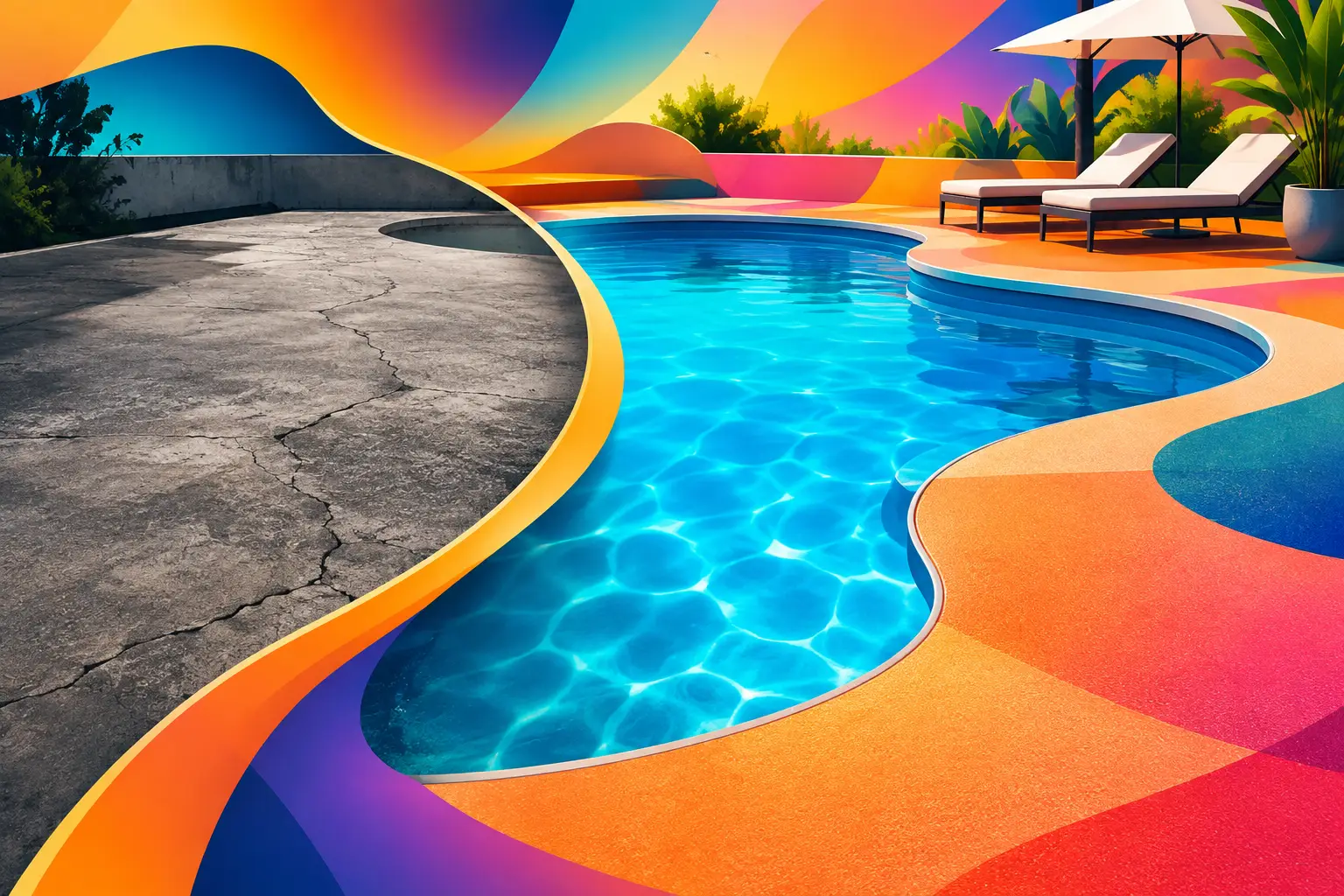
A pool should feel like the centerpiece of an outdoor retreat, not an excuse to hide cracked, faded, or painfully hot concrete. Resurfacing a patio around your pool gives the entire space a refined new foundation without the expense and disruption of a full tear-out. With the right decorative overlay, a tired deck can become an elegant, slip-conscious surface designed for long afternoons, evening entertaining, and the everyday enjoyment of your home.
For luxury-minded homeowners, the goal is not simply to cover old concrete. It is to create a setting that complements the architecture, landscaping, water color, and lifestyle of the property. That is where professional design and surface preparation make the difference between a short-lived cosmetic fix and a beautifully finished poolside investment.
Why Resurfacing a Patio Around Your Pool Is Different
Pool decks work harder than most exterior concrete surfaces. They face direct sun, standing water, splashes of chlorine or salt, furniture movement, bare feet, and constant changes in temperature. In Alabama and Florida especially, humidity, strong UV exposure, and heavy seasonal rain can accelerate the visible aging of plain concrete.
That exposure affects more than appearance. Surface wear can leave the patio looking chalky and uneven, while small cracks can collect water and become more noticeable over time. Smooth or improperly finished concrete can also feel slick when wet. A professional resurfacing system addresses the visual condition of the deck while giving the surface a more intentional texture and finish.
The key distinction is that resurfacing is not a substitute for structural repair. Decorative overlays are excellent for sound concrete with surface-level flaws, minor cracking, discoloration, or an outdated finish. If the slab has major movement, deep settlement, serious drainage issues, or broad structural cracks, those concerns should be evaluated before any premium finish is installed. Beautiful craftsmanship starts with an honest assessment of what lies beneath it.
What a Premium Pool Patio Overlay Can Change
A well-designed overlay can change the mood of an entire backyard. Rather than looking like a separate strip of utility concrete, the patio becomes part of a cohesive outdoor environment. The finish can be selected to feel coastal and light, warm and organic, contemporary and architectural, or richly textured with the character of natural stone.
Color matters, but it should be chosen with performance in mind. Very dark surfaces can absorb significant heat in full sun. Very light finishes can look fresh and expansive but may reveal certain types of outdoor debris more readily. The best choice depends on the amount of shade, the pool coping, the home’s exterior palette, and how the patio will be used.
Texture deserves the same level of attention. A poolside surface needs a comfortable balance: enough texture to support confident footing around water, but not so aggressive that it feels harsh under bare feet or difficult to clean. This is one reason generic coatings and do-it-yourself products often disappoint. They may offer a quick color change, but they rarely deliver the tailored texture, adhesion, and finish quality a high-use pool area demands.
Choosing the Right Look for Your Outdoor Space
The strongest pool deck designs do not compete with the water. They frame it. A soft neutral overlay can make blue water appear clearer and more inviting, while layered tones can bring dimension to a large patio that otherwise feels flat. For homes with stone facades, wood accents, or lush tropical landscaping, a custom decorative concrete finish can echo those materials without the maintenance demands of natural stone or wood.
A modern property may call for a clean, understated color field with subtle movement and crisp transitions at the coping. A more traditional home can benefit from a warmer, variegated finish that softens the geometry of the deck. Commercial hospitality settings often benefit from finishes that reinforce the property’s visual identity while standing up to heavier foot traffic.
The most successful projects consider the full view. Look from inside the home toward the pool, from the pool back toward the house, and from the patio seating areas across the landscape. Pool furniture, planters, outdoor kitchens, retaining walls, and screen enclosures all influence the right finish. A bespoke surface should look considered from every angle, not just appealing in a small sample board.
Do Not Choose Color From a Small Sample Alone
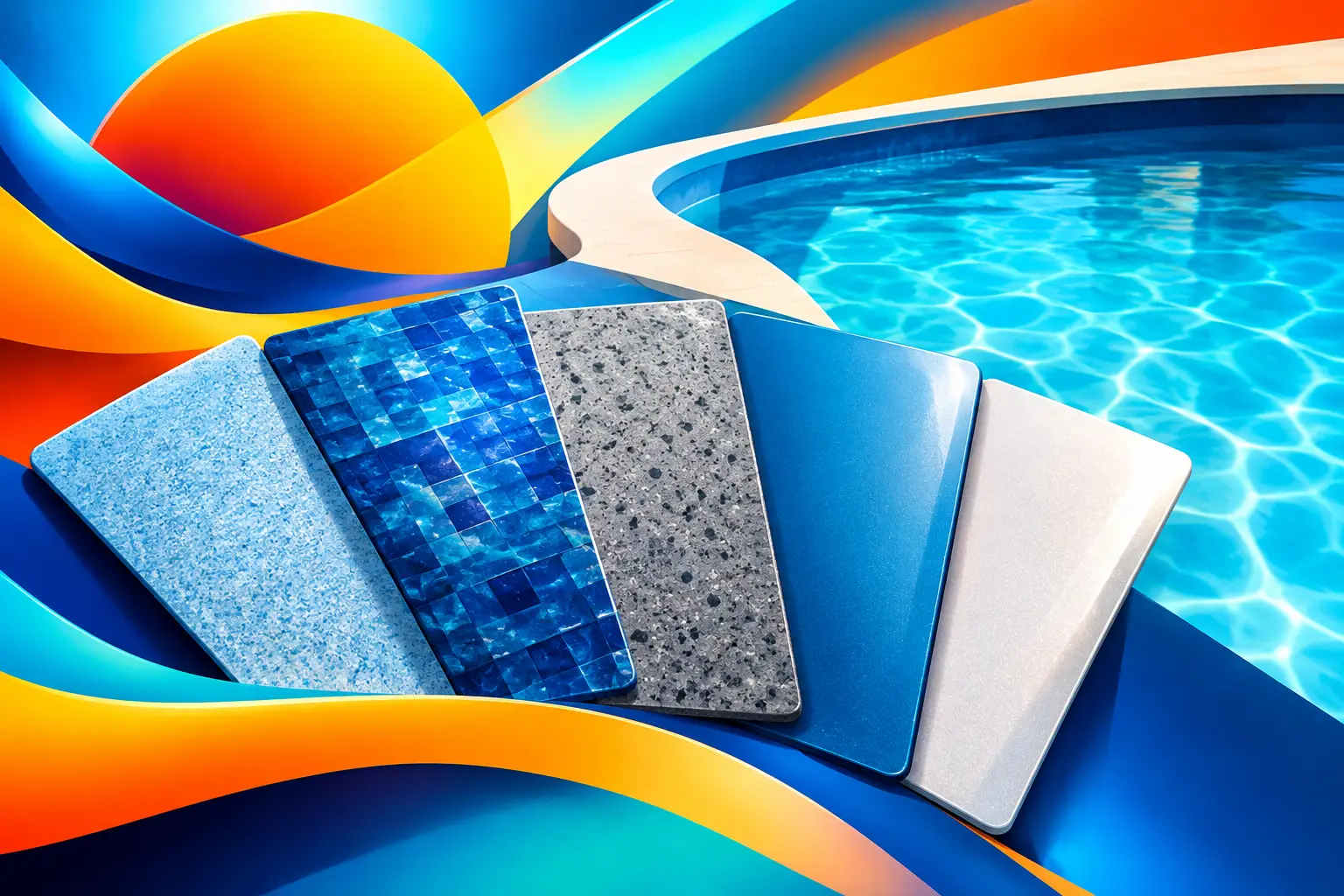
Decorative concrete can look different under bright midday sun, overcast skies, landscape lighting, and the warm glow of evening. A professional consultation helps place colors in context, including the existing coping, roof tone, exterior paint, and surrounding hardscape.
Samples are useful, but a full patio has scale. Variation that feels subtle in a hand-sized sample can read more dramatically across several hundred square feet. This is not a reason to avoid character. It is a reason to work with an installer who understands how materials, color layering, and texture will perform across the whole design.
The Work Beneath the Finish Determines the Result
The polished final appearance of a resurfaced pool patio is earned during preparation. The existing slab must be inspected, thoroughly cleaned, and mechanically prepared so the overlay can achieve the proper bond. Oils, sunscreen residue, old coatings, loose material, and surface contaminants can interfere with adhesion if they are not addressed correctly.
Cracks and damaged areas should be repaired according to their condition, with realistic expectations about movement. Some cracks are cosmetic and can be treated effectively. Others reflect active slab movement and may need to be honored or managed within the design. An experienced contractor will explain that distinction rather than promising an outdoor slab will never show movement again.
Drainage also deserves close attention. Water should move away from the home and avoid lingering in low spots around the pool deck. Resurfacing can improve the finish of the surface, but it cannot responsibly ignore a drainage problem. In some cases, minor corrections are possible; in others, the design must account for the existing slope and water path.
At Superior Concrete Solutions, this preparation-first mindset supports the level of luxury clients expect. The finish is the visible expression of the project, but lasting performance begins with disciplined evaluation, careful repair, and professional installation practices.
Resurfacing Patio Around Pool Areas: Performance Questions to Ask
Before choosing a resurfacing system, focus on how the patio will live, not only how it will photograph. Ask whether the finish is suited to wet environments, how its texture will feel under bare feet, and what maintenance it will require after installation. Clarify whether your pool uses chlorine or saltwater, since both the immediate pool environment and routine cleaning practices can influence material selection and care recommendations.
You should also ask about expansion joints, transitions to coping, and the expected appearance of repaired cracks. These details separate a thoughtful installation from a surface that merely looks good on day one. A premium contractor should be comfortable discussing trade-offs clearly.
For example, heavily textured finishes can offer greater traction but may collect more debris than a smoother profile. High-variation, handcrafted color can create exceptional depth but will not look as uniform as a single-color coating. Neither choice is inherently better. The right decision depends on whether your priority is visual movement, bare-foot comfort, maintenance simplicity, or a specific architectural style.
Protecting the Investment After Installation
A professionally resurfaced patio is designed for easier ownership, but no outdoor finish is maintenance-free. Routine care preserves its appearance and helps protect the sealer or protective topcoat. Sweep away leaves and grit, rinse away spills, and use cleaning products recommended for the specific system installed.
Avoid dragging sharp-edged furniture across the surface, particularly metal pieces without protective feet. Consider furniture pads, especially in dining and lounge areas where chairs are moved often. If you use pool chemicals nearby, handle and store them carefully to prevent concentrated contact with the deck.
Periodic professional review can also be worthwhile for high-use spaces or properties exposed to intense sun and weather. Resealing intervals vary by system, climate, usage, and cleaning habits, so there is no one schedule that suits every deck. A quality installer should provide clear care guidance tailored to your finish.
A Better Starting Point Than Demolition
Replacing a pool patio may be necessary when concrete is severely damaged or structurally compromised. But when the slab is fundamentally sound, resurfacing can offer a more efficient path to a dramatic transformation. It reduces demolition, preserves the existing foundation, and opens far more design possibilities than leaving plain concrete in place.
The result should feel purposeful: a cooler-looking, more polished pool surround that elevates the architecture and invites people to stay outside longer. If your pool deck has become the one part of the backyard you try not to notice, a thoughtful resurfacing plan can turn it into the surface that defines the entire experience.