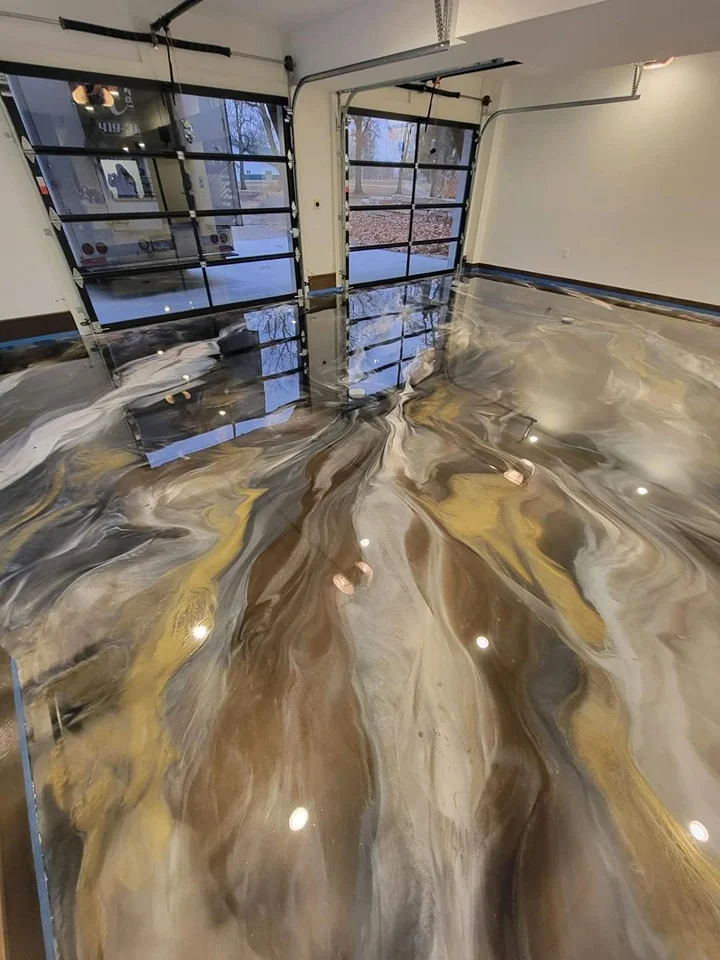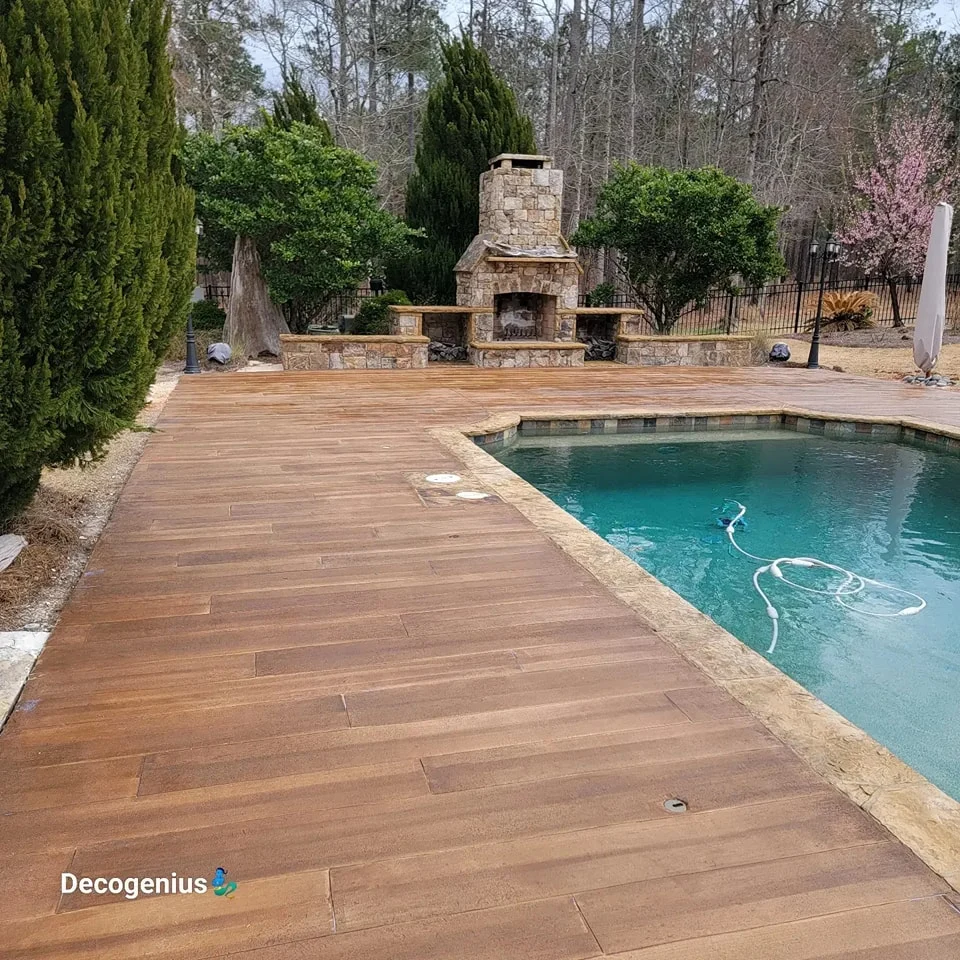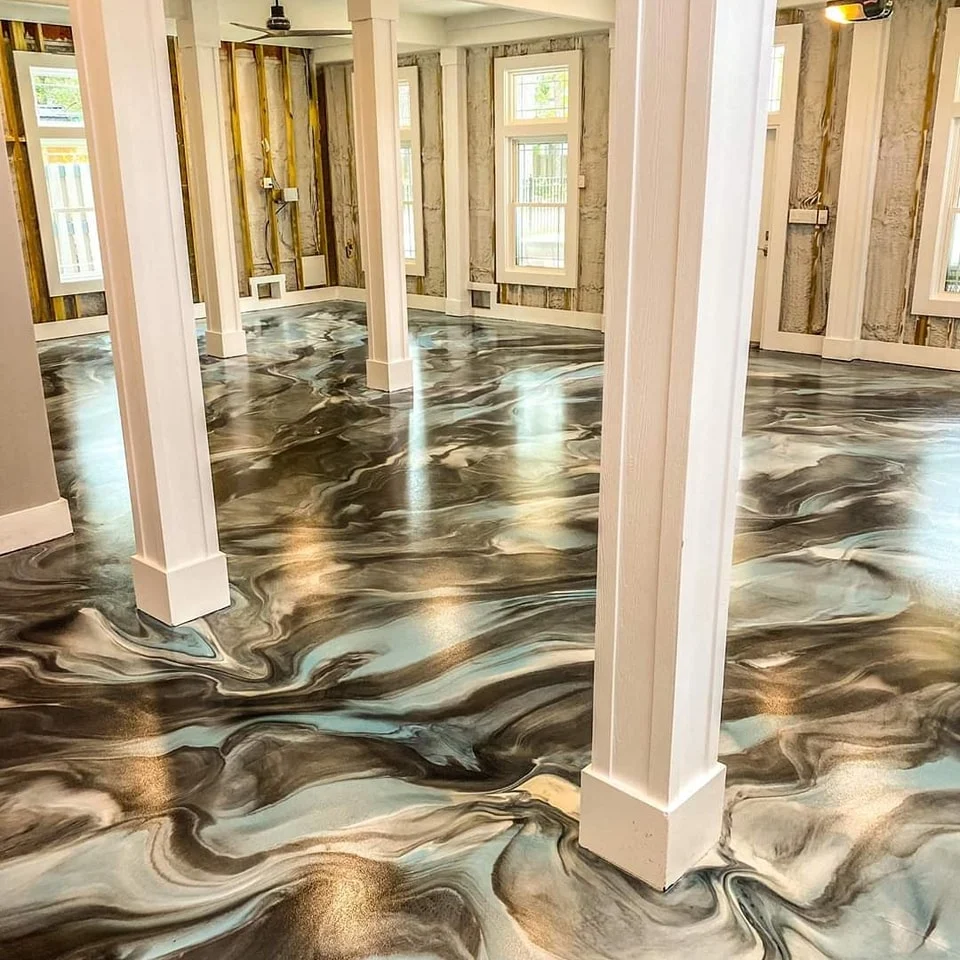
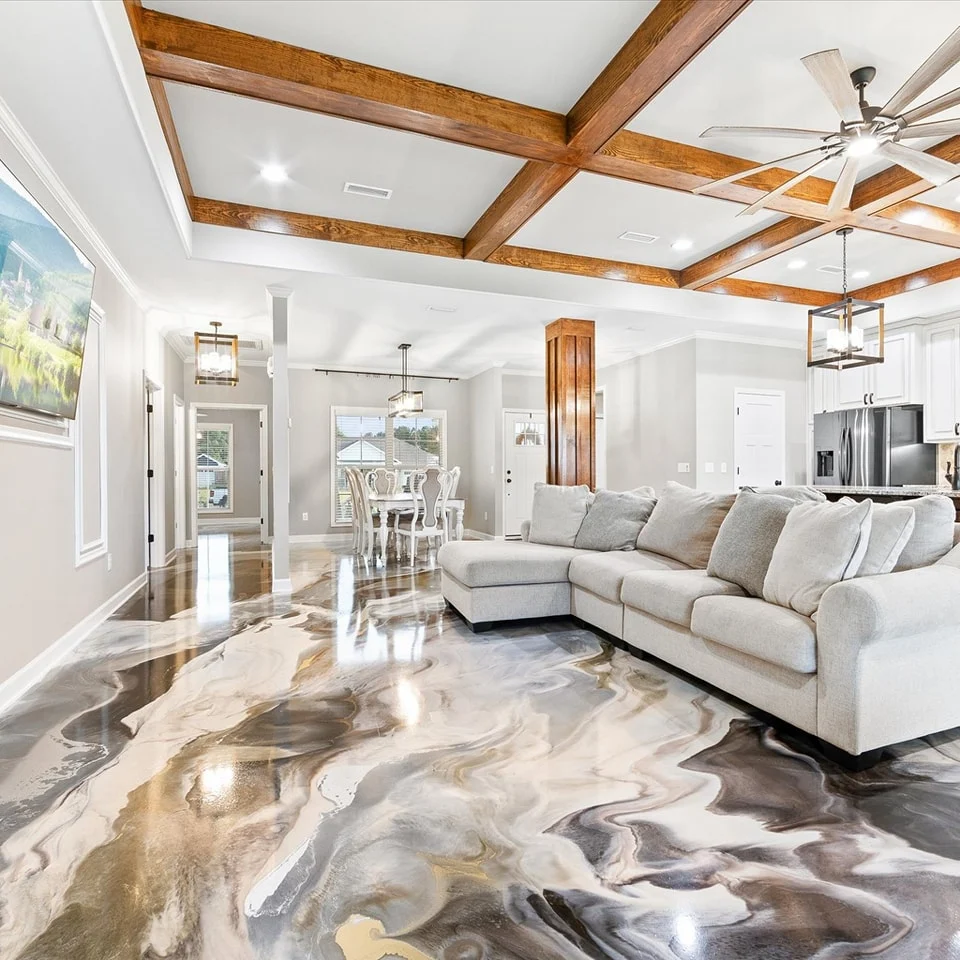
Metallic epoxy floors are known for their depth and shine, but most homeowners and business owners also want to know how well they hold up. The short answer: very well, as long as the floor is installed correctly. Here is what makes metallic epoxy durable, where it has limits and how to protect your investment.
What makes metallic epoxy floors durable?
Metallic epoxy is a multi-layer resin system that bonds to concrete and cures into a hard surface with no grout lines or seams. Three factors decide how tough the finished floor will be:
- Surface preparation. Diamond grinding opens the concrete so the epoxy bonds mechanically. Prep is where most floors fail, so we never skip it.
- Build thickness. Multiple layers create a thicker, stronger floor than a single DIY coat.
- Topcoat. A protective topcoat adds scratch and UV resistance.
Pros of metallic epoxy flooring
- Durable. Stands up to foot traffic, furniture, spills and stains.
- No seams or grout. Nothing to trap dirt or moisture.
- One of a kind. Hand-worked swirls and depth mean no two floors match.
- Easy to clean. A dust mop and a pH-neutral cleaner handle routine care.
- Brighter rooms. The reflective finish bounces light around the space.
- Luxury for less. The look of marble at a lower cost than natural stone.
See finished floors and design options on our metallic epoxy flooring page.
Cons of metallic epoxy and how we manage them
Every floor has trade-offs. Here is how we address each one:
| Potential drawback | How we manage it |
|---|---|
| Slippery when wet | Anti-slip additive in kitchens, baths and entries |
| Fine scratches over time | Durable topcoat, plus a recoat to restore gloss |
| Some epoxies amber in direct sun | UV-stable topcoat in sunlit rooms |
| Requires a sound slab | Crack repair and moisture testing before installation |
| Not a DIY project | Professional installation, since the pattern is hard to redo |
| Hard underfoot | Area rugs where you stand for long periods |
How long do metallic epoxy floors last?
There is no single number, because lifespan depends on the slab, the installation and how the floor is used. A floor on properly prepared concrete, with a quality topcoat and normal care, is built for long-term use in a home. Garages and commercial spaces see heavier wear, and high-traffic paths may eventually need a maintenance recoat to restore the gloss. During your consultation, we assess your slab and explain what to expect for your space.
What shortens a metallic floor's life?
Most early problems trace back to a few causes:
- Poor surface preparation
- Moisture vapor rising from the slab
- Thin, single-coat applications
- Harsh cleaners such as citrus, vinegar or bleach
- Heavy furniture dragged without pads
- Grit tracked in from outside
How to protect your metallic epoxy floor
A simple routine keeps the finish looking its best:
- Dust-mop often to remove grit.
- Clean with a pH-neutral cleaner.
- Put felt pads under furniture and mats at entries.
- Wipe up spills promptly.
- Ask about a maintenance recoat when high-traffic paths lose their gloss.
We cover care in detail at your final walkthrough.
Metallic epoxy vs. other flooring
| Metallic epoxy | Tile | Hardwood | Polished concrete | |
|---|---|---|---|---|
| No seams or grout | Yes | No | No | Yes |
| Water resistance | High | High (grout is the weak point) | Low | Medium |
| Custom look | Very high | Medium | Medium | Low |
| Maintenance | Low | Medium | High | Low |
Ready for design ideas? Read metallic epoxy floor ideas for Dothan homes or our guide on how to choose epoxy colors.