
Flooring covers more of a room than any other surface, so its color shapes how the whole space feels. Epoxy gives you a wide range to work with, from quiet solid tones to layered flake blends and dramatic metallic finishes. That range is a strength, and it also means more decisions. This guide explains how to choose epoxy colors with confidence for a home, garage or commercial space.
Define the mood before you compare colors
Decide how you want the room to feel before you look at samples. A refined floor does not have to be loud. Often the best choice lets the cabinetry, furniture and architecture take the lead.
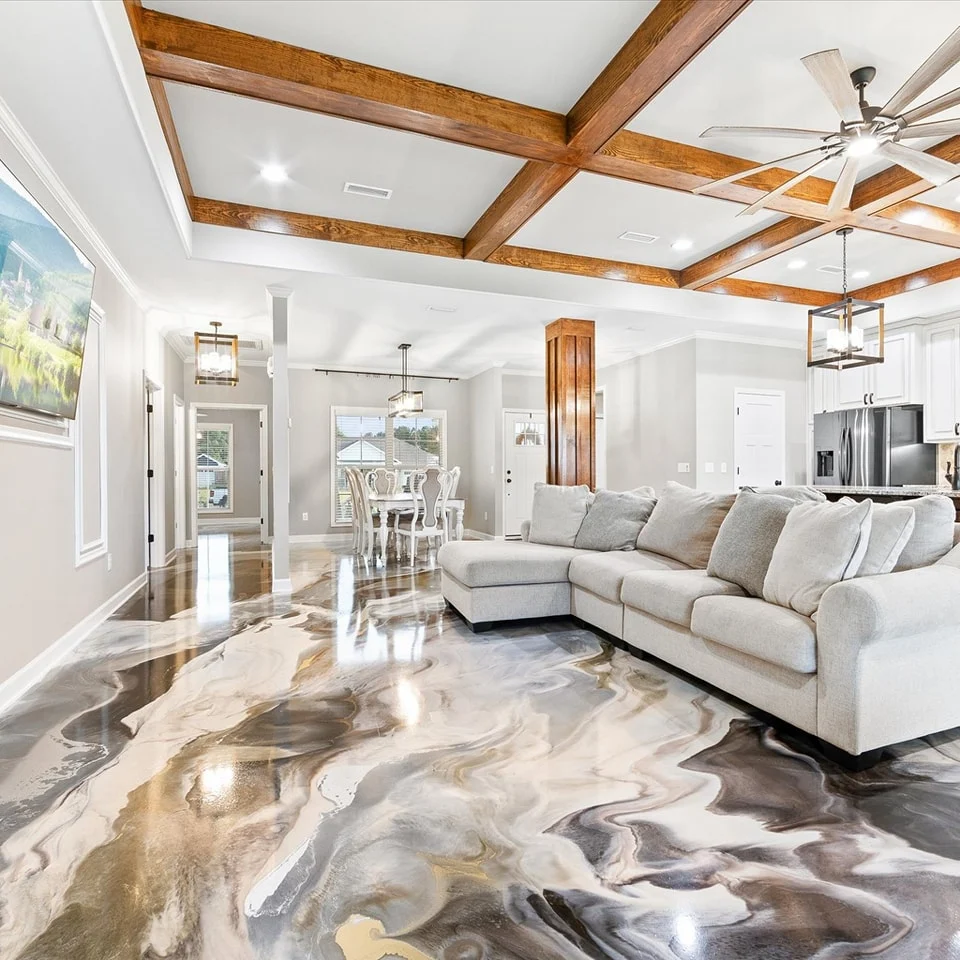
If you prefer a quiet, architectural feel, look at stone-inspired blends, warm taupe, soft gray, cream or deep charcoal. These tones suit contemporary homes, upscale garages, offices and hospitality spaces.
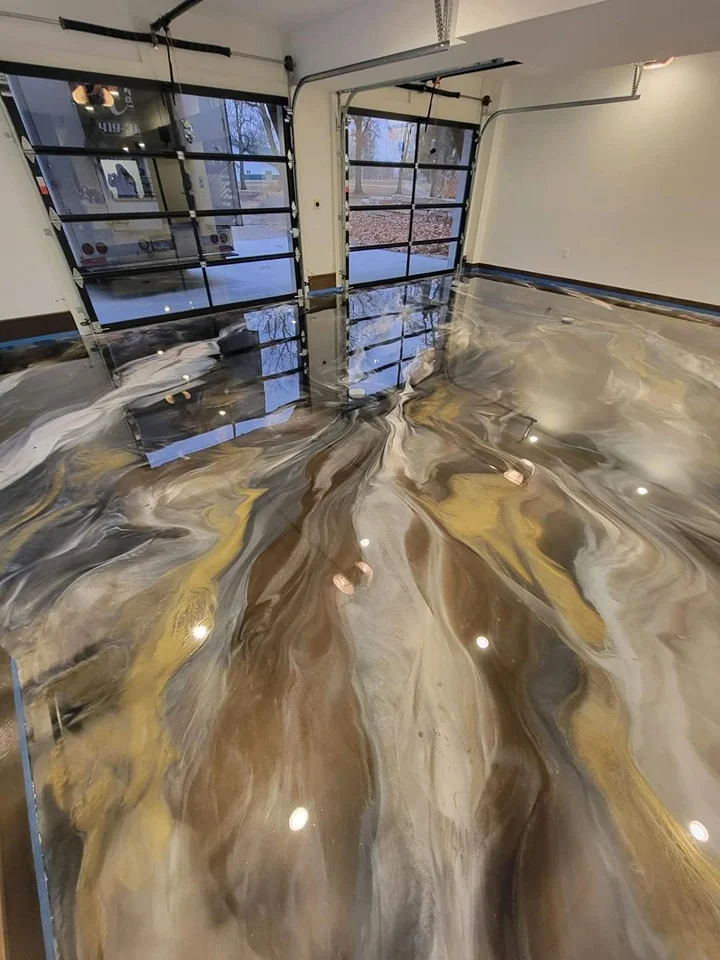
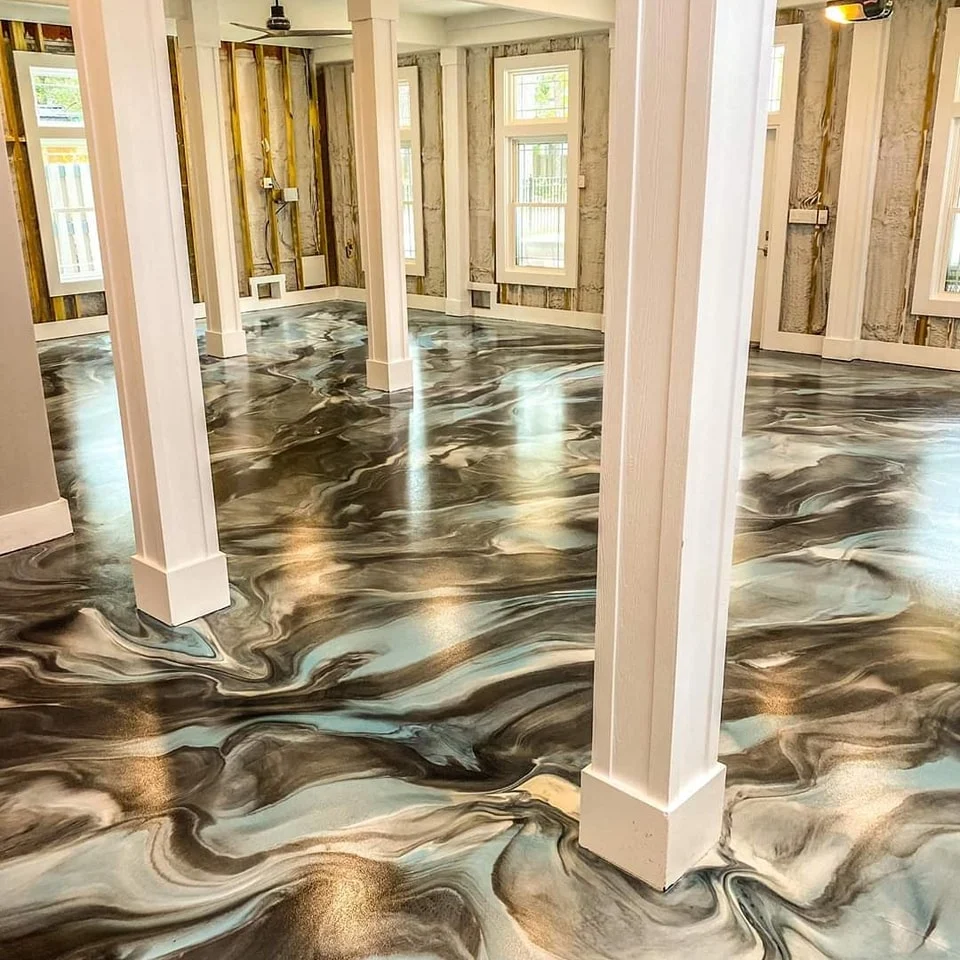
If you want the floor to be the centerpiece, metallic epoxy offers more drama. A charcoal base veined with silver looks sharp and bold. Champagne, soft bronze and pearl white give a room a bright, glowing quality. Deeper shades such as emerald, navy, copper and black make a stronger custom statement when the walls and lighting are planned around them.
A useful question to ask is what the room should say: sleek and contemporary, cozy and welcoming, or bold and on-brand. The answer narrows your options quickly.
Match the floor to your permanent finishes
An epoxy floor covers a large area, so coordinate it with the elements that are costly to change: cabinetry, countertops, brick, stone, trim, fixtures and doors.
As a rule, warm materials pair with warm floors. Brass hardware, travertine, tan brick and wood cabinets look at home beside bronze, caramel, greige, cream or warm gray. Cooler rooms with stainless steel, black metal, blue-gray stone or bright white walls suit graphite, silver, slate or blue-based tones.
A neutral floor does not have to look flat. A flake floor that blends white, black, beige and several grays adds depth while letting the room's other features stand out. Flake systems hide everyday dust well and work with many design styles, which makes them popular in garages and commercial settings.
For a business, connect the floor to your brand without copying the logo. A restrained neutral floor with one quiet accent usually ages better than an entire floor in a bold brand color. See commercial epoxy flooring for options.
See how your lighting changes the color
Light can shift an epoxy color more than most people expect. A gray that looks soft in daylight may turn cool or bluish under LED fixtures, and metallic pigments can look subtle from one angle and deep from another.
Start with daylight. Rooms facing south and west get stronger, warmer light that flatters cream, tan, gold and bronze. North-facing rooms get cooler light, where a very cool gray can feel cold unless you want a sharp, clean effect.
Then check your fixtures. Warm-white bulbs draw out amber, brown, beige and copper. Cool white light sharpens black, white, silver and blue undertones. In restaurants, shops and hospitality spaces, judge the floor under the lighting your guests will see, which is often evening light.
Metallic floors are especially sensitive to light. Their movement depends on window placement, ceiling height, light direction and gloss level, so reviewing a sample in the actual room beats choosing from a screen.
Choose epoxy colors for how the space is used
A floor should fit daily life. Light colors make a small room feel open and clean, but very pale solids show tire marks, dirt and spills faster in garages and busy commercial areas.
Dark floors look sophisticated beside pale walls and contemporary fixtures. In a sunny room, though, a near-black finish shows dust, footprints and pet hair. That trade-off may be fine in a quiet lounge. For a high-traffic garage, service bay or shop entry, a medium-tone blend is usually smarter.
Four practical directions to consider:
- Mid-tone flake blends add texture and forgive dust, dirt and heavy traffic.
- Greige, taupe and gray stay versatile if your decor or the property's owner changes.
- Metallic finishes make the biggest custom impact in rooms where people can see the movement.
- Dark solids look sleek in controlled spaces with a steady cleaning routine.
Aim for a color whose upkeep matches how the space is actually used.
Decide if the floor leads or supports the room
Metallic epoxy can suggest natural stone, polished metal, moving water or smoke. It works best when you want the floor itself to be a design feature, as in a media room, salon, lobby, showroom or custom home.
If the room already has bold countertops, patterned tile, strong wallpaper or statement lighting, a calmer flake blend or solid color keeps the space balanced. Pick one or two features to carry the drama.
Scale matters too. A pattern that looks bold on a small sample becomes more pronounced across a large open floor, while a subtle finish often gains richness at full size. Large sample boards and a clear conversation about application technique help set expectations.
Choose colors that will age well
Trends are useful for ideas, but a floor is a long-term surface. Stone shades, warm neutrals, cool mineral grays, black paired with white, and metallics inspired by nature tend to stay appealing because they rest on classic design principles.
You can still make a statement. Use bold color with intent: deep blue fits a game room or a business with a coastal theme, and copper complements warm woods and industrial accents. Pick the color that fits the property rather than the one trending this month.
Review large samples in the room
Small chips and photos are a starting point, not a final answer. Epoxy has depth, variation, reflection and texture that a tiny sample cannot show, especially with metallic systems, where the installer's technique shapes the pattern. Browse our project gallery to see finished floors at full scale.
Place samples next to your walls, cabinets and doors. Look at them in morning, afternoon and evening light, then step back, since you see a floor from across the room.
Experienced decorative concrete installers can also tell you whether a finish suits your slab, the room's use, the sheen you want and the upkeep you expect. At Superior Concrete Solutions, every color decision starts with a free on-site design consultation, so your choice is tested in the real space before work begins.